(Title)”The World Becomes Japan oriented in the 21st Century”
Kimito Kusaka – Professor, Critic、 PHP Publishing 2000
(What impressed me)
-The Japanese masses – 120 million of them – are the most educated, hard-working, and serious people in the world, and they know how to enjoy their lives in abundance. Most countries in the world want to move from the lower to the middle class. The world wants to be like Japan and the United States.
-Korean public imitates Japan, no matter how anti-Japanese the politicians educate them, they secretly think Japan is better than them.
-New York has imitated the Japanese police box system.
-The elderly in Japan are the richest in the world, and the young envy the elderly.
-The rich silver market is unprecedented in the world.
-We should just continue as we are now. The media, critics, and politicians are only trying to scare us by saying that they can’t see the way things should be and that they don’t know what direction they are going.
-When your savings get low, you can go back to work. Critics make themselves look smart by writing darkly.
The Japanese Ministry of Finance and the Bank of Japan are at the mercy of the US. But, that’s why US stocks went up.
-Critics have many surgeons who are good at cutting, but few obstetricians and gynecologists.
-China is an army nation without the ability to go out.
-Britain and France are all talk, but not much power.
-This recession is a consolidation of excesses.
-Excesses in five industries (finance and securities, construction, government, distribution (shopping malls, department stores), and agriculture are to be converted into new businesses.
-The 20th century was the era of Japan, and the previous 200 years were dominated by whites.
-Japan single-handedly ended the era of absolute white supremacy, and racial equality was the greatest event of the 20th century.
-The last hundred years were the era of imperialism and only military power was persuasive. Industrial power for military power was achieved with hard work, and studying Western civilization and culture.
-Around 1920, 5 major powers were U.S., Britain, Japan, France, and Italy. 3 major naval powers were U.S., Britain, and Japan.
The Iwakura Mission(between 1871 and 1873 by leading statesmen) believed that the difference between Japan and the West was 50 years.
-Japan should be aware that Japan is a superpower, and disseminate information from us.
-U.S.is a country with drugs, terrorism, racial tensions, equal rights for men and women, the burden of being strong, rich and great or else. Future wars are: information wars (ideology and philosophy), international conference wars, high tech wars, money wars, oil resources wars, energy wars, environmental wars.
@ 7 major trends of the world in the future: this is how Japan and the world will go.
1.Mass consumption society (McDonald’s hamburgers, baseball, Coke, rock music, etc.): Economic power, intellectual level, culture, depth of history, opportunities for friendly competition, advanced processing industries, etc. are necessary.
2.Middle-class society: All Japanese are smart and middle-class.
3.Metropolitanization: Japan is advanced in infrastructure technology, e.g., subways, bullet trains, etc.
4.Peace (ethnicity over nation, economy over military).
5.Low birthrate and aging population: Because of the lack of ability to make proposals by companies, today’s silver is going on overseas trips and coming back after being ripped off or cheated. The U.S. has no philosophy of aging. Low birthrate is good for the earth. No worries – we can put robots in schools and companies, we already have enough social capital (schools, roads, libraries, hospitals, nursing homes, etc.).If not enough, hire Indian or Chinese geniuses – we need the social skills to do so.
6.Eastern-style thought revolution: Fuzzy, fluctuating, discontinuous, complex systems and other tacit knowledge, depth psychology, psychic powers, and intuitive grasp of the whole are needed.
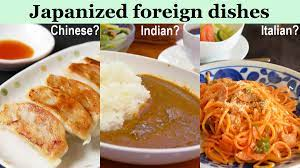
7.Coexistence of other races and racial equality: Cuisines from all over the world are available in Japan.What Nobunaga Oda did in 16th century was separation of religion, politics, and economy.In the Edo period, Confucianism separated religion from academia.
@The direction Japan should go in the future
@Top Profits – To take advantage of being on the leading edge is necessary from now on.
- Instinctive Satisfaction: We want to fully enjoy our culture. .
- Low cost: zero development cost, zero learning cost (English is free for the English). walkman, manga, etc. Self-satisfaction sold well.
- Derivative products
- Dominant profit, de facto standard (make the best + sell the best)
5 .Joy of working
6 .Elimination of vested interests
@Later profits – only enjoy the last of industrialization process
1.Low cost (phone, use of used products).
- To take advantage of suddenly being able to use recent technology and systems
- Only partial improvement is needed.
4.To export partial improvements to the world
5.Vested interests. worlds come to resemble each other.
-Economist: says Japan is going to lose the oil war, the information war, and the money war.
But I say: we can win in the culture and entertainment wars. Edo period had communal living skills, and we have developed our own culture, which we
can utilize now.
@The conventional way of doing things that divides the world in two.
-East and West (socialism and liberalism, dictatorships and democracies)
-North and South (poor and rich countries, developed and backward countries, free and protectionist trading countries, countries that protect human rights and countries that do not, countries with elections and countries without elections)
-Japan judges a country by whether it is a rich or poor country. The United States considers fair or not fair countries. Most of the world’s 200 countries consider whether they are aid-giving countries or not.
@The world can be divided into continental countries and island countries.
A: Island countries: Japan, etc.
Easy to form a unified nation.
Protected by the sea, less concerned about defense, peaceful paradise, vulnerable to invasion by foreign enemies.
–Their Characteristics:
1.Extremely pragmatic, small country divisions, short life span
2.Maritime trade zone, union of port cities
3.Maritime military force is necessary, land forces are weak.
4.Religiously tolerant
5.Gaikokujin(non-Japanese) residence in port cities, increasing mixed race, racially tolerant.
B: Continental countries: China, India, Russia, Europe
In these countries, unification is difficult, people do not trust the state, and the company. They rely on blood relatives, but only if they share profits. Individualism is thoroughly prevalent. They pretend to obey but secretly betray power of the state.
Defense comes first, especially the army. Surrounded by many countries, diplomacy is well developed, sensitive to information from other countries.
In the world of the weak and the strong, they will do their utmost to strategize.
–Their Characteristics:
- Great powers emerge, surrounded by hegemony, central power (vs democracy), huge empires.
2.The ideology is unrealistic, transcendental.
3.They treat the periphery as barbarians.
4.Trade is tribute.
5.Invasion of foreign enemies, rural uprisings, court corruption, decline of economic and military power, rampant smuggling, flight of people abroad
@Relationships between island countries and continental countries:
1.The island states prevent the emergence of giant united states in the continental countries.
2.When a giant empire emerges, they must oppose it with a coalition.
3.It is necessary to secure friendly countries in the vicinity of continental countries.
4.They do not intervene in continental countries.
(My comment)
Pessimism prevails in the media, including myself. Things can look completely different depending on one’s point of view. Pessimism is not responsible (if it is wrong, it cannot be blamed), and it makes one look superior. The media has the constitution of being able to increase sales by writing pessimistically.
The author Kusaka’s commentary is always optimistic. And since he has good reasons to be optimistic, we are strangely convinced that he is right.
Furthermore, the Japanese have a tendency to be overly serious and hard-working. Today, national goals have disappeared. There is a call to produce something new. According to Mr. Kusaka, “Let’s not be so uptight and take it easy, because we are still the most advanced in the world today”.
It has been more than 20 years since this book was published, but the basic content does not seem to have changed much. We should always have both an optimistic and pessimistic viewpoint. And the author, Mr. Kusaka, is a representative of that optimism. While the pessimism of the “lost 30 years” dominates today, we need to learn from him the positive aspects and bright prospects for Japan.
Today, foreign tourists’ impressions of travel to Japan are very positive, as you see on YouTube. This is largely due to the kindness of the Japanese people and the orderliness of the country. This is another phenomenon that supports the author’s theory.
interviews with 53 foreign tourists in English
